Source waterproof double d lock boat rope for shipping, agriculture, and packaging
Compare 30 listings for waterproof double d lock boat rope made from nylon, polyester, or PP. Buyers can review diameters from 4mm to 120mm, certifications like CCS and ABS, and customization options for shipping, agriculture, and packaging needs.
Key considerations
Products List


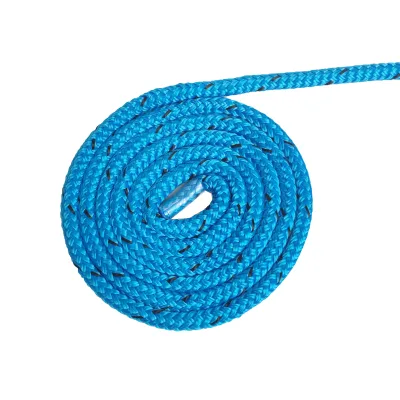


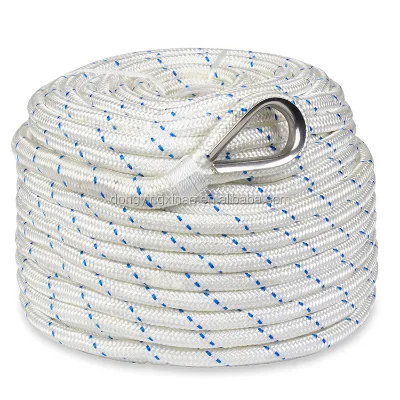

Comprehensive Sourcing Guide
Strategic Sourcing Guide for Waterproof Double D Lock Boat Ropes
Understanding Technical Specifications and Material Variability
When sourcing a waterproof double D lock boat rope, buyers must first navigate the complex landscape of material composition and dimensional standards. The provided product data indicates a diverse range of materials available in the market, including Nylon, Polyester, and Polypropylene (PP). Each material offers distinct performance characteristics critical for marine environments. Nylon ropes are frequently cited in the supply data, known for their high elasticity and shock absorption, which is vital for securing vessels against dynamic loads. Conversely, Polyester is highlighted as a robust alternative, often preferred for its low stretch and superior resistance to UV degradation. Polypropylene is also noted, typically offering buoyancy but requiring careful evaluation regarding long-term durability in harsh saltwater conditions.
The dimensional specifications for these ropes vary significantly across different product models. The observed data lists diameter ranges spanning from 4mm up to 120mm, with specific models citing narrower bands such as 4mm-30mm or 4mm-80mm. For a "double D lock" application, which implies a specific knotting or securing mechanism, the diameter is a critical factor. Thinner ropes (4mm-10mm) are often suitable for lighter securing tasks or decorative marine uses, while thicker diameters (up to 120mm) are required for heavy-duty mooring or industrial shipping applications. The strand configuration is another technical variable, with options including 3, 4, 8, and 12 strands. The number of strands directly influences the rope's flexibility, strength, and resistance to abrasion. Buyers must verify that the selected diameter and strand count align with the specific load requirements of their vessel and the intended locking mechanism.
Furthermore, the product data suggests that customization is a standard feature in this sector. Buyers can often request specific lengths, such as 220m or 300m, or entirely custom dimensions. The standard packaging is noted as "Clients Require" or "According to Requirements," indicating that the supply chain is flexible but requires clear communication regarding packing methods, such as PP bags or wooden reels, to prevent damage during transit. The color options are generally extensive, ranging from "All Color" to specific requests like Blue, allowing for color-coding systems for different vessel zones or safety protocols.
Compliance, Certification, and Safety Standards
In the marine industry, compliance is not merely a formality but a critical safety requirement. The supply data reveals a high concentration of certifications, including CCS (China Classification Society), ABS (American Bureau of Shipping), GL (Germanischer Lloyd), DNV (Det Norske Veritas), and LR (Lloyd's Register). These are the primary classification societies that validate the quality and safety of marine equipment. Additionally, certifications such as GS (Geprüfte Sicherheit), CE (Conformité Européenne), and ISO9001 (Quality Management Systems) are frequently listed.
When evaluating a supplier for a waterproof double D lock boat rope, buyers must verify that the specific product model carries the necessary certifications for the target market. For instance, if the vessel operates in European waters, CE certification is often mandatory. If the vessel is flagged in the United States, ABS or US Coast Guard recognition may be required. The data shows that some products are certified for specific types, such as "Braided Rope," while others are certified for specific materials like Nylon or PP. It is essential to cross-reference the certification with the material and type; a certification for a Nylon rope does not automatically apply to a Polyester variant of the same model.
The HS Code 630533 is consistently associated with these products, which classifies them under sacks and bags of a kind used for the packing of goods, though in the context of ropes, it often points to specific textile categories. Buyers should ensure that the supplier's documentation aligns with this classification to avoid customs delays. The "Safety" and "Durable" attributes listed in the product data are qualitative claims that must be substantiated by the physical test results and certification marks. A rope labeled as "Safe" without a recognized classification society mark should be treated with caution. The presence of ISO9001 indicates that the manufacturer has a quality management system in place, but it does not guarantee the specific performance of the rope itself. Therefore, the buyer's due diligence must focus on the specific product certifications (CCS, ABS, DNV, etc.) rather than just the general factory certification.
Cost Drivers and Pricing Structure Analysis
The pricing for waterproof double D lock boat ropes is influenced by a combination of material costs, certification fees, and order volume. The observed price range in the market spans from $0.20 to $15.33 USD per unit. This wide variance suggests that the unit price is highly dependent on the specific configuration, including the material type, diameter, and length. A 4mm Nylon rope will naturally cost significantly less per meter than a 120mm Braided Rope made of high-performance UHMWPE or heavy-duty Polyester.
The Minimum Order Quantity (MOQ) is a significant cost driver. The data indicates an MOQ range of 1 to 1500 units, with a specific mention of an MOQ of 100 for certain product lines. For buyers requiring small quantities for testing or specific vessel repairs, the ability to order low MOQs (even down to 1 unit) can prevent overstocking but may result in a higher unit cost. Conversely, buyers purchasing in bulk to meet the 1500-unit threshold can likely negotiate better pricing, potentially bringing the cost closer to the lower end of the observed range.
Lead times also impact the total cost of ownership. The standard delivery time noted is 30 days. This timeline can fluctuate based on the complexity of the customization, the availability of raw materials, and the specific certification requirements. If a buyer requires expedited shipping or urgent delivery for a vessel in dry dock, they may incur additional logistics costs. The payment terms, typically listed as TT (Telegraphic Transfer), are standard but should be negotiated to include milestones, such as a deposit upon order confirmation and the balance before shipment, to mitigate financial risk.
| Cost Factor | Impact on Price | Verification Requirement |
|---|---|---|
| Material Type | High (Nylon vs. UHMWPE) | Confirm material composition in spec sheet. |
| Diameter/Size | High (4mm vs. 120mm) | Verify exact diameter and tolerance. |
| Certification | Medium to High | Check specific class society marks. |
| MOQ Volume | Significant | Confirm tiered pricing structure. |
| Customization | Variable | Define packing and length requirements. |
Typical Applications and Usage Scenarios
The versatility of these ropes is evident in the diverse usage categories listed in the product data. While the core keyword focuses on "boat rope," the applications extend far beyond simple mooring. The data explicitly lists uses such as "Shipping," "Agriculture," "Security," "Outdoor Gear," and "Packaging." This indicates that the supply chain serves a broad spectrum of industries, and buyers must ensure the selected rope is optimized for marine use rather than general industrial use.
For marine applications, the "Double D Lock" mechanism suggests a specific method of securing lines, likely involving a locking pin or a specialized knot configuration that prevents slippage under load. This is crucial for "Security" applications where theft or unauthorized movement of a vessel is a concern. The "Chinese Knot" usage mentioned in the data points to decorative or traditional applications, which may require specific aesthetic finishes or color combinations. However, for functional boat usage, the "Packaging" and "Shipping" categories are more relevant, implying the rope's utility in securing cargo or equipment on board.
The "Outdoor Gear" category highlights the rope's suitability for camping, sailing, and other recreational activities where weather resistance is paramount. The "Waterproof" aspect of the core keyword is critical here; while the data mentions "Environmentally Friendly" and "Efficient" attributes, the actual waterproofing capability must be verified through material properties. Nylon and Polyester are generally resistant to water absorption, but the treatment and braiding technique determine the final waterproof performance. Buyers should match the rope's intended usage with the specific environment; for example, a rope used for "Agriculture" might not have the same UV resistance as one designed for "Outdoor Gear" or "Marine" applications.
Supplier Evaluation and Operational Capabilities
Evaluating a supplier for waterproof double D lock boat ropes requires a deep dive into their operational capabilities and geographic footprint. The data indicates that the primary origin is China, with specific mentions of Zhejiang Province as a manufacturing hub. Zhejiang is a well-known center for textile and rope manufacturing, offering a robust supply chain ecosystem. However, buyers should not rely solely on the general location; they must verify the specific factory's capacity to handle their order volume and customization needs.
The "Customization" attribute is a key differentiator. Suppliers that offer "Clients Require" or "According to Requirements" packing and "Can be customized" standards demonstrate flexibility. This is essential for buyers with unique vessel requirements or specific branding needs. The ability to customize the "prod_model" (e.g., STY005, Nylon-2, Marine-5) suggests that the supplier has a modular production line capable of adapting to different specifications.
When assessing suppliers, buyers should look for evidence of the certifications mentioned earlier. A supplier claiming CCS, ABS, and DNV certifications should be able to provide valid certificates for the specific product batch. The "Strand" configuration (3/4/8/12) also indicates the supplier's technical proficiency; a supplier offering a wide range of strand counts likely has advanced braiding machinery. The "Delivery" time of 30 days is a standard benchmark, but buyers should inquire about the current production schedule to ensure this timeline is realistic for their specific order. Payment terms like TT are standard, but the supplier's willingness to discuss terms and provide a detailed proforma invoice is a sign of professionalism.
Quality Control and Long-Term Procurement Strategy
Ensuring the long-term reliability of waterproof double D lock boat ropes requires a robust quality control (QC) strategy. The product data lists attributes such as "Durable," "Safe," "Convenient," "Flexible," "Efficient," and "Environmentally Friendly." These are qualitative claims that must be validated through rigorous testing. Buyers should request test reports that verify tensile strength, elongation at break, and resistance to abrasion and UV radiation. The "Safety" attribute, in particular, demands that the rope does not degrade unexpectedly under load, which could lead to catastrophic failure.
The "prod_packing" attribute, which varies from "PP Bag or Wooden Reel" to "Clients Require," is a critical aspect of quality control. Improper packaging can lead to moisture damage, tangling, or physical abrasion before the rope even reaches the vessel. For long-term procurement, buyers should establish clear packaging specifications in their contracts to ensure the rope arrives in optimal condition. The "Environmentally Friendly" claim should be backed by material safety data sheets (MSDS) or environmental compliance certificates, especially if the rope is used in sensitive marine ecosystems.
For long-term procurement, buyers should consider the lifecycle of the rope. Nylon and Polyester have different degradation profiles; Nylon is more susceptible to UV damage over time, while Polyester is generally more stable. Buyers should plan for regular inspection and replacement schedules based on the material properties. The "Standard" range of 4mm-120mm suggests that a single supplier might not cover all needs; a diversified sourcing strategy might be necessary to cover different vessel sizes and applications. Finally, maintaining a relationship with a supplier who offers "Customization" and has a track record of "Efficient" delivery will ensure that the procurement process remains smooth and responsive to changing operational needs. By focusing on verified certifications, clear material specifications, and robust quality control, buyers can secure reliable waterproof double D lock boat ropes that meet the demanding standards of the marine industry.
FAQs
What certifications are available for waterproof double d lock boat rope?
Available certifications include CCS, ABS, GL, DNV, LR, GS, CE, and ISO9001. These marks validate safety and quality for marine environments, but buyers must verify that the specific product model holds the required class society approval for their target market.
Which materials are used for waterproof double d lock boat rope?
Common materials include Nylon, Polyester, and Polypropylene (PP). Nylon offers high elasticity, Polyester provides low stretch and UV resistance, while PP offers buoyancy, so selection depends on the specific load and environmental conditions of the vessel.
Can the diameter and strand count be customized for this rope?
Yes, customization is available for diameters ranging from 4mm to 120mm and strand counts of 3, 4, 8, or 12. Buyers can request specific lengths like 220m or 300m to match their vessel's mooring or securing requirements precisely.
What is the typical lead time for ordering waterproof double d lock boat rope?
The standard delivery time is 30 days from order confirmation. This timeline may vary based on the complexity of customization, availability of raw materials, and specific certification requirements requested by the buyer for their specific project.
How does the minimum order quantity affect pricing for this rope?
Minimum order quantities range from 1 to 1500 units, with some lines requiring 100 units. Ordering larger volumes often reduces the unit price, while smaller quantities allow for testing but may result in higher per-unit costs.
Where are manufacturers of waterproof double d lock boat rope located?
Primary manufacturing origins are in China, with specific hubs noted in Zhejiang Province. Buyers should verify the specific factory location to ensure logistical feasibility and to confirm that the supplier has the capacity to meet their volume needs.
What packaging options are available for shipping this rope?
Packaging is flexible and often follows client requirements, including PP bags or wooden reels. Buyers must specify their packing needs clearly to prevent damage during transit and to ensure the rope arrives in suitable condition for immediate use.